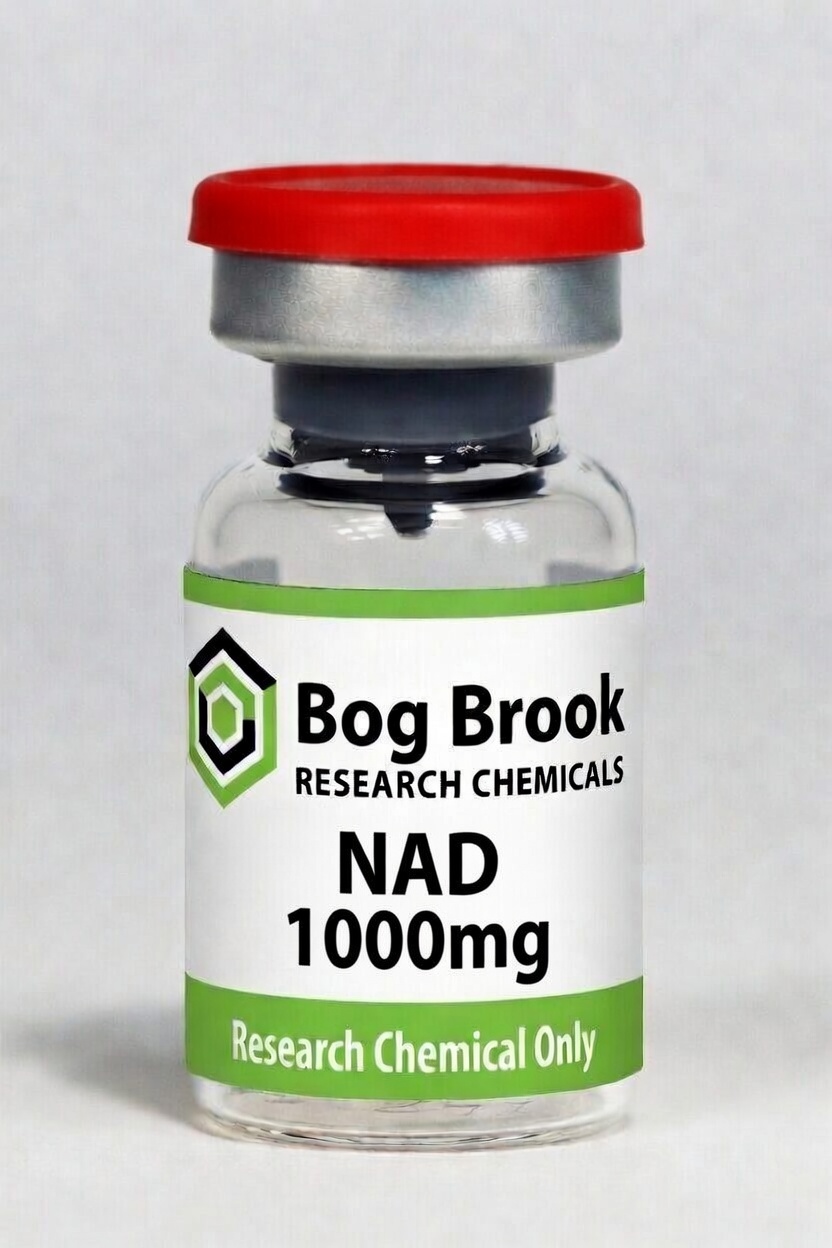
NAD+ 1000mg

$99.95

Nicotinamide adenine dinucleotide (NAD) is a coenzyme central to metabolism.[1] Found in all living cells, NAD is called a dinucleotide because it consists of two nucleotides joined through their phosphate groups. One nucleotide contains an adenine nucleobase and the other, nicotinamide. NAD exists in two forms: an oxidized and reduced form, abbreviated as NAD+ and NADH (H for hydrogen), respectively.

In cellular metabolism, NAD is involved in redox reactions, carrying electrons from one reaction to another, so it is found in two forms: NAD+ is an oxidizing agent, accepting electrons from other molecules and becoming reduced; with H+, this reaction forms NADH, which can be used as a reducing agent to donate electrons. These electron transfer reactions are the main function of NAD. It is also used in other cellular processes, most notably as a substrate of enzymes in adding or removing chemical groups to or from proteins, in posttranslational modifications. Because of the importance of these functions, the enzymes involved in NAD metabolism are targets for drug discovery.

Category:

Description

The chemical formula for oxidized NAD+ (nicotinamide adenine dinucleotide) is generally recognized as \(C_{21}H_{27}N_7O_{14}P_2\). While often marketed within the peptide category for research or anti-aging, NAD+ is technically a non-peptide coenzyme composed of two nucleotides, not amino acids. 
Key Molecular Details (Oxidized NAD+):
  • Formula: \(C_{21}H_{27}N_7O_{14}P_2\)
  • Molecular Weight: \(663.43 \text{ g/mol}\)
  • CAS Number: 53-84-9
  • Structure: Nicotinamide ring, ribose sugar, and adenine linked via phosphate groups.
  • Reduced Form (NADH): \(C_{21}H_{29}N_7O_{14}P_2\)
Reviews

There are no reviews yet.

Be the first to review “NAD+ 1000mg”

Your email address will not be published. Required fields are marked *